Tour In City

Edit Template
Edit Template

Rome Private Walking Tour and Traditional Food Tasting with Paired Wines

0
4 hours
Cut off: 8 hours
Day tour / activity
4440

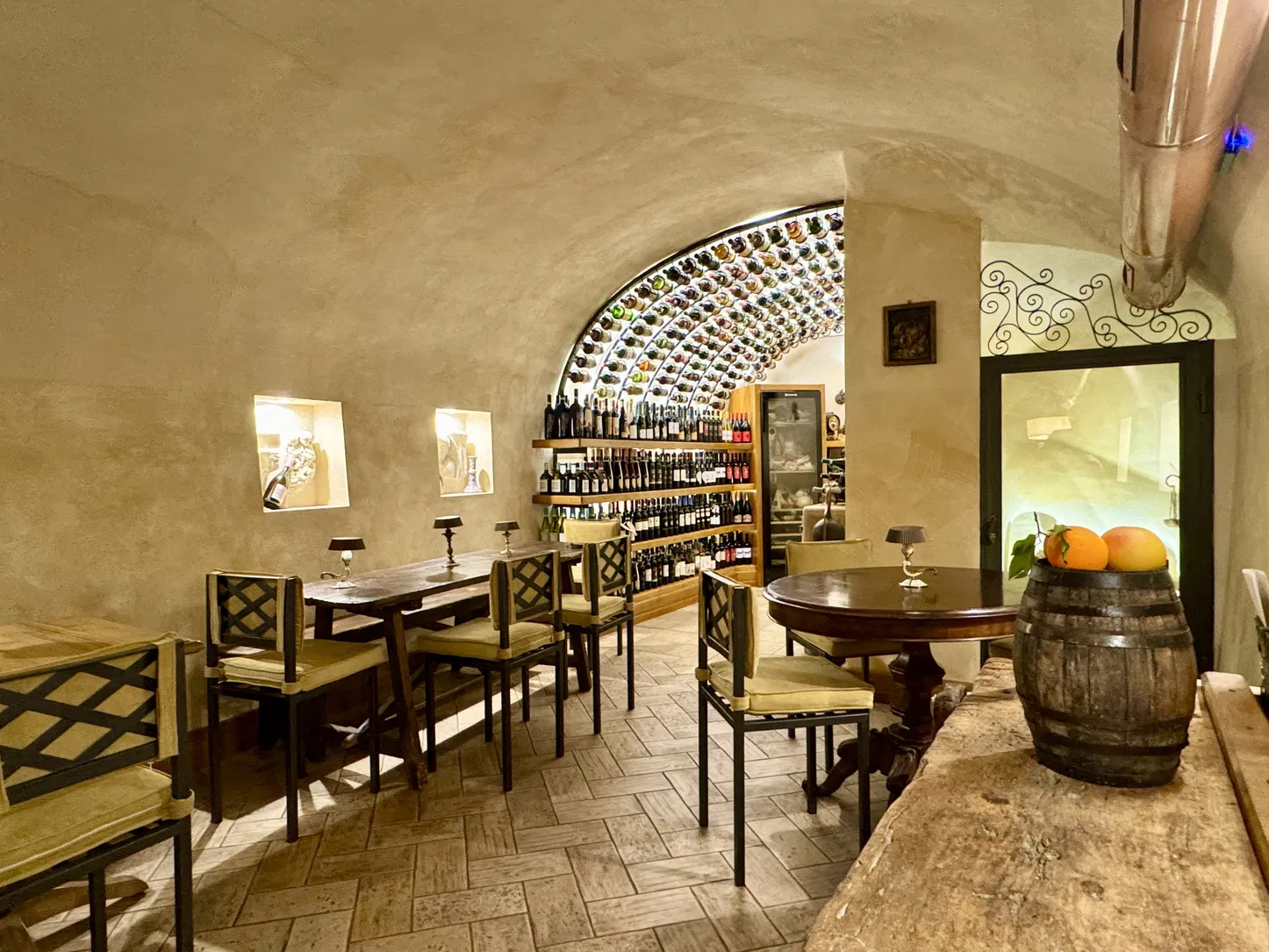
Enjoy a walking tour of Rome, a 3-hour private guided walk starting from the Spanish Steps, next to the Barcaccia Fountain in the center of the square. Meet your guide, who will lead you to the Trevi Fountain, considered one of the most beautiful fountains in the world, and start this amazing experience. You will discover that there is much more than just the beauty of this famous fountain. Past Palazzo Montecitorio, the seat of Parliament, and the Column of Marcus Aurelius sculpted with the original scenes that inspired the film “Gladiator” the tour will continue towards the Pantheon, built in 128 BC, as a temple dedicated to all the Olympians. Continuing the walk among alleys, small squares admiring ancient buildings, and splendid views of the historic center of Rome, you will reach Piazza Navona, built on the ruins of the Stadium of Domitian in 85 AD, to host athletics games. This square is considered a symbol of Baroque Rome, with architectural elements and sculptures by masters such as Bernini (Fountain of the 4 Rivers), Borromini, Rainaldi (Church of Sant’Agnese in Agone) and Pietro da Cortona (the frescoes of Palazzo Pamphili). After leaving Piazza Navona, you will arrive at Piazza Campo de’ Fiori, the heart of medieval Rome. Since 1500, this square has hosted a colorful local market in the morning and the evening, and it has become the center of the capital’s nightlife. Afterward, your guide will show you Piazza Farnese, with Farnese Palace and its splendid fountains designed by Michelangelo. Once you reach the Tiber River, you will cross the Sisto bridge, built in 1475, and the guide will accompany you through the alleys of Trastevere, one of the oldest and most characteristic neighborhoods in Rome. The last stop of your walk will be the “Fabullus” wine cellar. In this authentic underground cellar, created from the careful and skillful recovery of a Roman cistern from the 1st-century a.D., you will be able to enjoy a journey of research and healing of the flavors of the Italian food and wine tradition, which will allow you to taste the specialties produced with the best raw materials to guarantee a unique and unforgettable experience. It is essential to know that the Fabullus winery has selected products recognized by the “Slow Food” presidium for you from small artisans who preserve the tradition and history of Italian gastronomy while respecting the environment and biodiversity. Dop, igp.

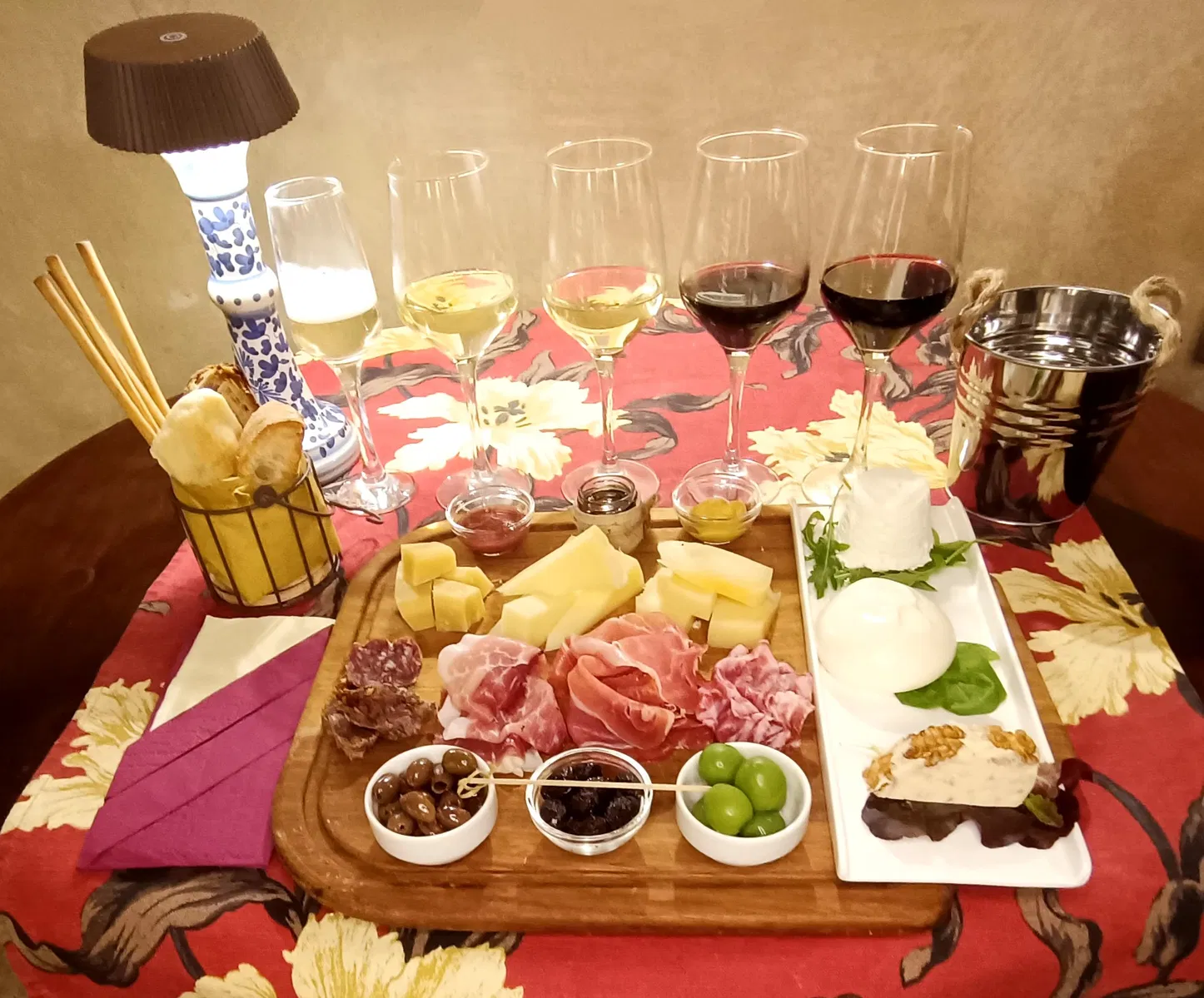
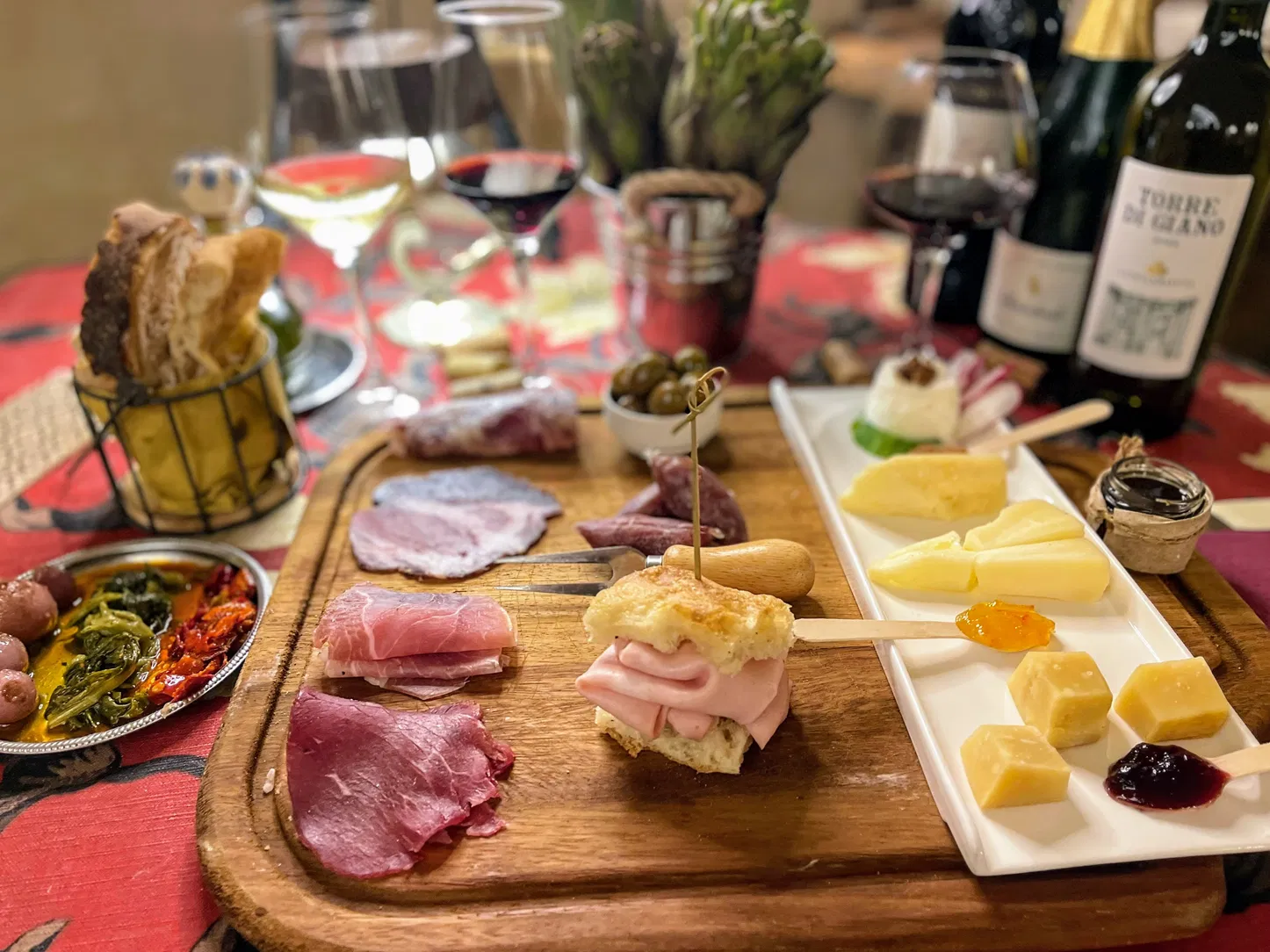
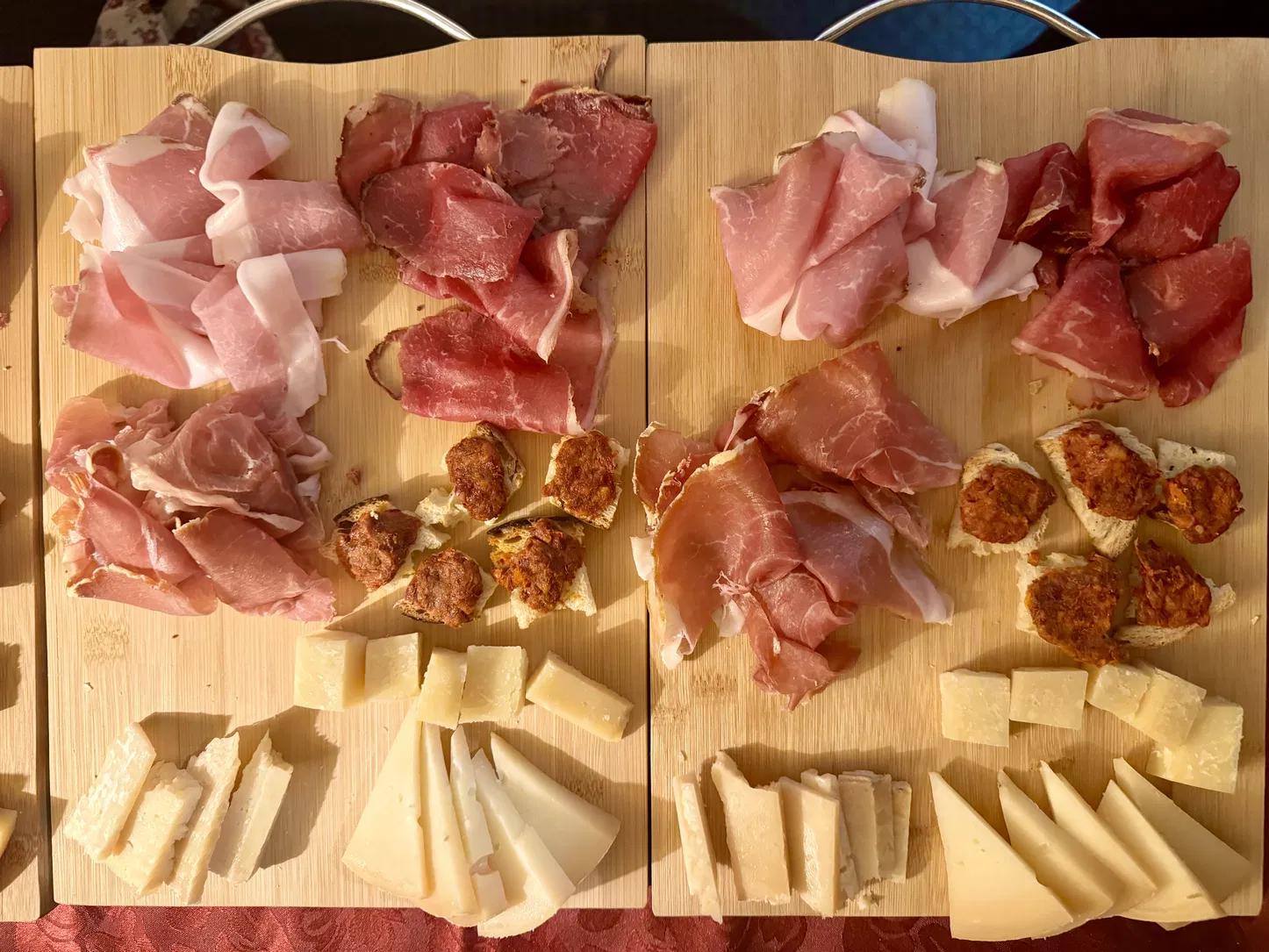
Welcome to the “Fabullus Wine cellar” food and wine journey! A journey through the flavors that have made Italy the home of good food, from the north to the south of the peninsula: gorgonzola dop taggiasca olives, Parma ham dop, parmigiano reggiano, Lardo di colonna to dop, Mortadella bolognese dop, Salame marchigiano, tuscan bread “Sciocco” pdo, Guanciale di Amatrice, Pane Veroli pgi, focaccia romana, mozzarella campana di bufala, pecorino di moliterno pgi, provolone del monaco pdo, bresaola di cow podolica, peperone crusco pgi, and more!

What’s included

  • Private tour guide at disposal 3 hrs
  • Food tasting with wine pairing
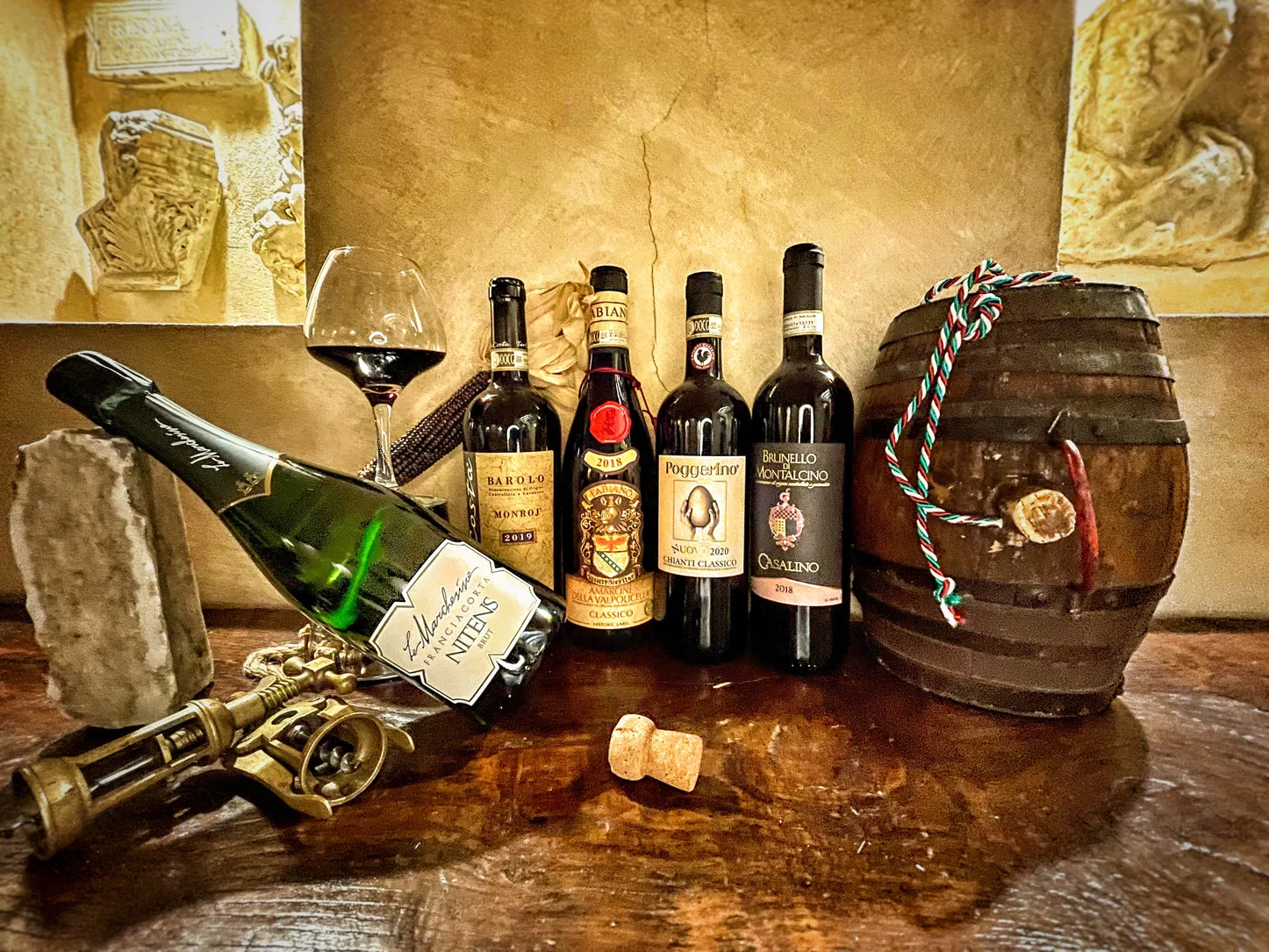
  • Superior Italian wines selected by our expert staff
  • Selection of products recognized by the Slow Food* presidium
  • Presentation and explanation by our expert, friendly staff
  • Prosecco – 4 Types of Wine Top quality,  2-courses food tasting (Selection of 3 aged kinds of cheese, 4 types of cured meats, mortadella with pistachio, 2 types of vegetables in oil extra virgin or vinegar, etc.) 4 types of olives 3 qualities of bread, Olive oil EVO, Roman Pizza, Honey & jams Coffee and Dessert

(All dishes served may vary depending on the season and availability) Dessert, Liquor, coffee and water

  • Alternatives are available upon request and can be adapted according to food intolerances
  • Unlimited water

Exclusions

 
  • Gratuities
  • Pantheon entry ticket
  • Hotel pick-up and drop-off
  • Transportation to/from attractions

PLEASE NOTE

 
  • Not wheelchair accessible
  • Not stroller accessible
  • Pets are not allowed
  • Near public transportation
  • Adults must accompany children under 18 years old.
  • It is mandatory to be at the meeting point 10 minutes before the tour departure time
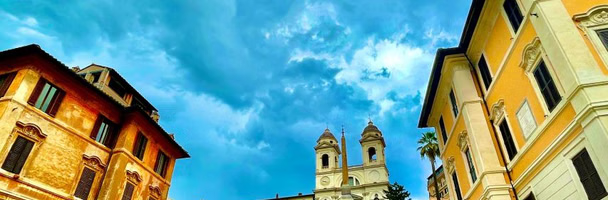
  • You will meet your guide at the obelisk on the top of the Spanish steps (In front Of The Church Trinità Dei Monti)
  • Late arrivals cannot join the group or reschedule unless you pay for the activity again. As per “No Show” rules, you will not be entitled to a refund
  • The activity can suffer 10 min variation due to organizational reasons
  • No change on a booking can be accepted 24 Hours before the starting time of the tour. In that instance, no refund will be issued
  • For the safety of all guests, the tour operator reserves the right to refuse service to passengers who are intoxicated or show signs of intoxication. If, as a result, your tour is canceled, you will not be entitled to a refund
  • When booking, it is mandatory to communicate any allergies or intolerances to food and drinks. Failure to communicate does not guarantee the service
  • Alternatives are always available upon request and can be adapted according to tastes or food intolerances
  • Fabullus and the staff are not responsible for any reactions caused by allergies or intolerances to food and drinks if not communicated before the service

ATTENTION:


Late arrivals over 15 minutes cannot join the experience and won’t get refunded. The starting time can differ up to 15 minutes from the one selected. We kindly ask you to communicate to our staff anything that might prevent you from regularly joining the experience. When booking,  It is mandatory to communicate any allergies or intolerances to food and drinks, it not communicated does not guarantee the service.

This experience is not suitable for:

  • Children under 18 years if not accompanied by an adult.
  • People with food allergies
  • People with diabetes
  • Wheelchair users or with serious mobility problems
  • Vegans

What do I need to bring?

Comfortable shoes, and in summertime sunglasses and suncream.

In wintertime, an umbrella is suggested.

Cancellation policy

 
  • We will charge a cancellation fee of 100% if booking is cancelled 3 days or less before the event

Piazza della Trinità dei Monti

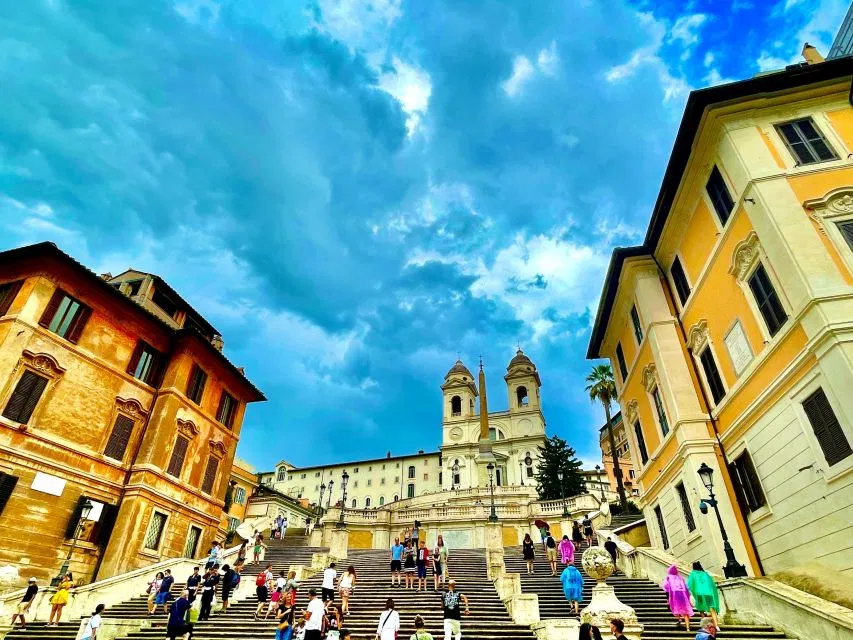
You will meet your guide at the obelisk on the top of the Spanish steps (In front Of The Church Trinità Dei Monti next to the Obelisk). Meeting Time 10 minutes before your tour departure time.

Spanish Steps

“Piazza di Spagna” has a central position in the city of Rome allowing it to be an inevitable stop for everyone walking through the narrow and charming streets leading to a breath-taking panorama where modern life and ancient history converge in one location connecting Piazza di Spagna to the gothic Trinità dei Monti church. In the middle of the square there is the “Barcaccia” and it is one of the most beautiful Baroque fountains in Rome. It was constructed by Gian Lorenzo Bernini and his father in 1627 on behalf of Pope Urban VIII, the fountain takes its name from the characteristic sinking barge shape. The work was inspired by the flood that caused the overflow of the Tiber River in 1598, which pushed the boats right in the place where the fountain is now. In fact, it was ingeniously designed below the road level as if it were semi-submerged.

Famous Rome squares

Trevi Fountain

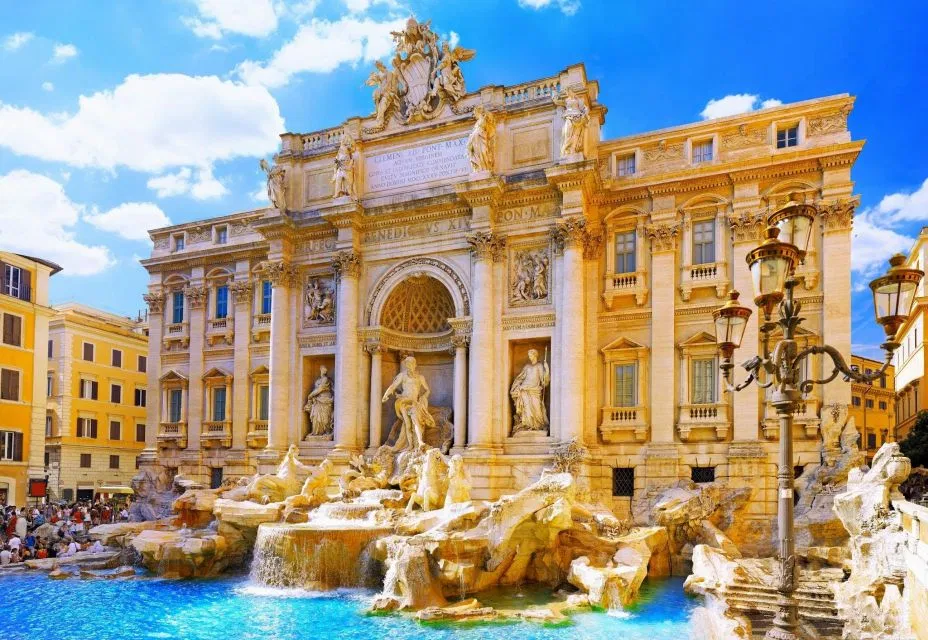
The Trevi Fountain (Fontana di Trevi) is an 18th-century fountain in the Trevi district in Rome, designed by Italian architect Nicola Salvi and completed by Giuseppe Pannini and several others. Standing 26.3 metres (86 ft) high and 49.15 metres (161.3 ft) wide, it is the largest Baroque fountain in the city and one of the most famous fountains in the world. The name of the Latin fountain derives from the Latin word Trivium (intersection of three streets). The statue is located right in the center of De ‘Crocicchi Street, Poli Street, and Delle Muratte Street. During the sixth century, the aqueducts were not well maintained and the 14 functioning ones were damaged following the invasion of the Ostrogoths. The virgin water aqueduct carries the water to the Trevi fountain, after having collected it 10 km from the Italian capital. The aqueduct is still in use today, despite some interventions during which the fountain remained empty. Calcium-free water is thought to be one of the causes.

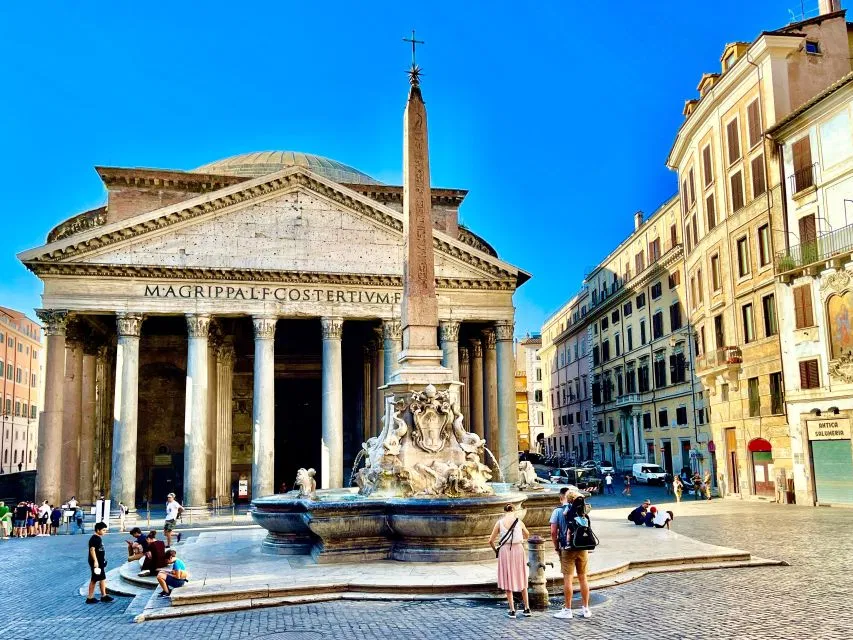
Pantheon

The Pantheon has represented the greatest expression of the glory of Rome for more than two thousand years. The story of the Pantheon is inseparably tied to the Eternal City. and been its image through the centuries.  Built by Agrippa between 25 and 27 BC the Pantheon was a temple dedicated to the twelve Gods and to the living Sovran. Traditionally it is believed that the present building is result of the radical reconstruction by Hadrian between 118 and 125 AD. It is the only ancient Roman building that has remained practically intact through the centuries. In 608 Pope Boniface IV had the remains of many martyrs removed from the Christian catacombs and placed in the Pantheon.  Thereafter the temple was officially converted to Christianity and named Saint Maria ad Martyres. The Pantheon was an inspiration to Raphael, one of the greatest architects of the Renaissance, and he requested it be his place of eternal rest.

Column of Marcus Aurelius

The Column of Marcus Aurelius (Latin: Columna Centenaria Divorum Marci et Faustinae, Italian: Colonna di Marco Aurelio) is a Roman victory column in Piazza Colonna. It was built in honour of Roman emperor Marcus Aurelius and modeled on Trajan’s Column. The Imperial Monument is dedicated to the former emperor of Rome and his war effort in the Barbarian wars of his reign as Caesar of Rome from 161-180 AD. Though there aren’t many direct sources from the time of reign of Marcus Aurelius, the monument itself can tell us a great deal about the Romans in the creation of the monument and the scenes from it. The column of Marcus Aurelius is a depiction of Roman life during the reign of Marcus Aurelius; the monument not only tells us the reason it was built but the importance this emperor had on society and the respect he had earned. Based on common understanding of Roman life and the belief that citizens felt a duty toward public service, the benevolence of Marcus Aurelius was such that this monument was erected in his memory and preserved for its grandeur and representation. The monument contains a frieze, which depicts the Northern Germanic campaigns of Marcus Aurelius’ and his war with the Barbarians. The Romans called these wars North of the Danube, Bellum Germanicum or bellum Marcomannicum. Though the monument is more likely a monument for military achievement, it’s also considered a funerary monument, since the planning and erection of the monument happened around the same time as the death of Marcus Aurelius. The monument was said to either begin at the end of the wars in 176AD and he died in 180AD, the monument finished construction in 193AD.

The Montecitorio palace

Palazzo di Montecitorio is one of the most symbolic places of Italian politics. After the unification of Italy, the building was chosen as the seat of the Chamber of Deputies: at the beginning of the 20th century, the renovation works were entrusted to architect Ernesto Basile, one of the major exponents of the Italian Liberty style, who built a new structure behind the ancient one, reduced the courtyard, demolished the rear wings and created the floral-style façade on the Parliament square. The new building hosts the hemicycle debating chamber, illuminated by an impressive canopy of colored glass (the work of Giovanni Beltrami), the so-called Velario. In the lower part there is the allegorical frieze on canvas by Giulio Aristide Sartorio dedicated to the history of the Italian people. The large corridor that runs alongside the debating chamber is also known as “Transatlantico” due to the furnishings and architecture that recall the great halls of ships crossing the ocean at the turn of the century. Among the various rooms inside the palace, we also find the Sala della Lupa, adorned with ancient tapestries and linked to the referendum of 2 June 1946 which sanctioned the birth of the Italian Republic. The different rooms of the building are embellished with ancient and modern artworks, including by Carlo Carrà, Giorgio De Chirico and Renato Guttuso.

Navona Square

Continuing your walking you’ll reach Navona Square. This huge square, once used to performed incredible battleship, hosts scuplture and architectrural masterpieces such us Bernini’s Four River Fountain and Borromini’s church Santa Agnese in Agone. It is considered to be the most beautiful and elegant baroque squares.

Campo de’ Fiori Square

Walk to Campo de’ Fiori, characterized by a daily vibrant outdoor food market. According to some legends, the square takes its name from Flora, a beautiful woman beloved by the triumvir Pompeius. Thanks to its strategic position, the square grew more and more important over time, becoming an essential center of several commercial and cultural activities, while nowadays it is known as one of the main nightlife landmarks of the Eternal City.

Farnsese Square

Immediately behind Campo de’ Fiori, you will see one of the city’s most elegant squares, Farnese Square (Piazza Farnese, in Italian). The square was paved beginning in 1545 and completed with one of the two granite basins that can still be admired today. The second basin was added about forty years later when Cardinal Farnese was allowed to move it from Piazza San Marco, where the two basins, originally from the Baths of Caracalla, had been placed in 1466 by Pope Paul II Barbo to adorn his new palace. In the late Renaissance arrangement of the space in the square, the two basins had a purely ornamental function: it was Girolamo Rainaldi in 1626 who adapted them as fountains. In addition to Palazzo Farnese, the square shows other noble palaces built at the turn of the 17th and 18th centuries. The right side of the square is occupied by the church of Santa Brigida and the house where the Swedish saint lived, together with her daughter St. Catherine, from 1350 until her death in 1373. The church was erected in 1391, the year of the saint’s canonization, and is now run by the Brigidine Sisters.

Sisto Bridge

Siisto Bridge was built by Pope Sisto IV della Rovere (1471-1484) for the Jubilee of 1475, the suggestive and romantic Ponte Sisto has a postcard background from which you can see the dome of St. Peter. It allowed direct communication to Piazza Trilussa in the Rione XIII – Trastevere, and the Vatican, with the rest of the city. The bridge consists of four arches covered in travertine, has a circular opening in the center, and bears five papal coats of arms in marble. 

Trastevere

Trastevere in Rome was once inhabited largely by fishermen and sailors due to its close proximity to the Tiber. The name Trastevere comes from two Italian words that mean “across the Tiber (river).” That is because the neighborhood, as you will see in the map below, is just across the Tiber from the rest of the city. With the Imperial age, money came into the district with many important figures like Julius Caesar choosing to build their Villas in the area. It is this mix of wealth combined with architecture from the Middle Ages that gives Trastevere its irresistible charm. With its appealing old-world vibes, cobbled streets filled with clusters of shops, bars, and restaurants, and old buildings with exposed woodwork, Trastevere is a fascinating place to explore. Trastevere is home to some of the best hidden gems of Rome. From historical churches and fresh food markets to some of the city’s coolest bars and restaurants. There is so much to see and do in Trastevere, but here we’ll cover the highlights in this incredible Rome neighborhood. 

Fabullus Wine Cellar/ Food tasting with wine pairing

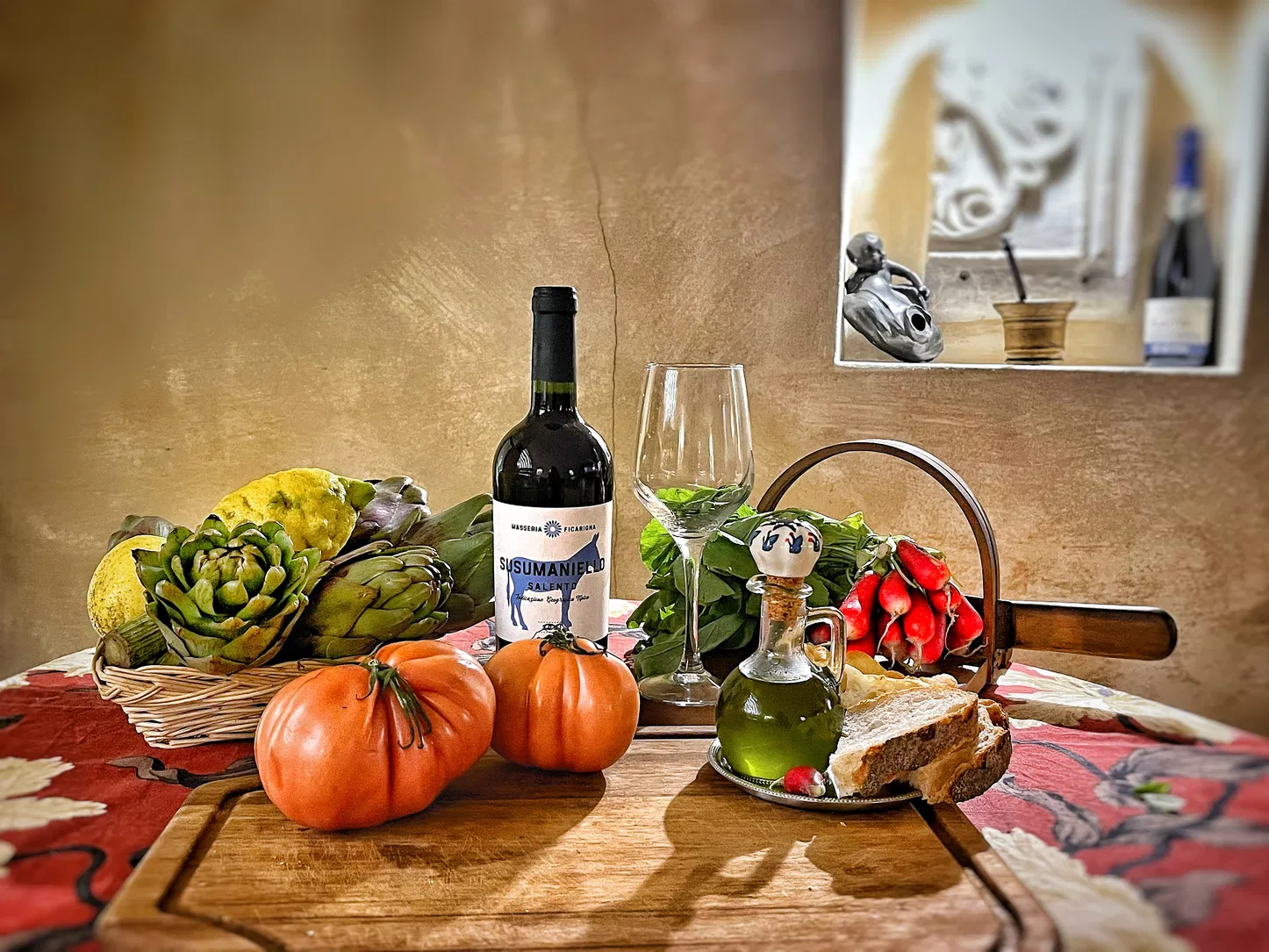
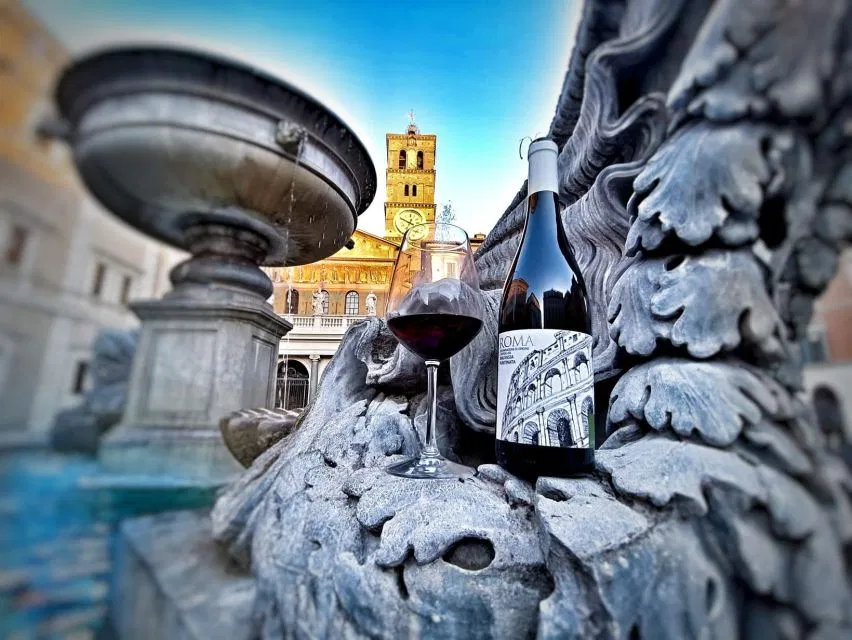
In the heart of Trastevere, it is located in the basement of an 18th-century building, the Catina Fabullus. An underground cellar, obtained from the careful recovery of a cistern of the 1st century AD, furnished with antique furniture that make this place unique. By booking this food and wine tasting, you will have the opportunity to experience an exclusive moment. During the tasting, served in an underground environment with over 2000 years of history, our staff will welcome you and tell the stories and origins of many Italian culinary delicacies. Prepare to immerse yourself in history and savour the best Italian culinary culture paired with rare and excellent wines, all produced with respect for tradition. Fabullus winery has selected for you the products recognized by the Slow Food* presidium from small artisans who preserve the tradition and history of Italian gastronomy while respecting the environment and biodiversity.

You can start this experience at the following places.

Piazza della Trinità dei Monti, 00187 Roma RM, Italy

Piazza della Trinità dei Monti, 00187 Roma, IT

Book Now
From€255
Save To Wish List

Adding item to wishlist requires an account

28
  • Book Direct
    Book Direct: Best prices always guaranteed.
  • Multilingual Customer Service
    Multilingual Customer Service: Talk to us, we are here to help.
  • No Hidden Costs
    No Hidden Costs: All taxes and fees included.

25 years of experience

Tour in The City was founded in 1990 in response to the ever increasing demand for customized guided tours, in order to visit one of the most important art collections in the World, the eternal city Rome.

Agenzia Italiana

Must-see attractions

Attraction 1
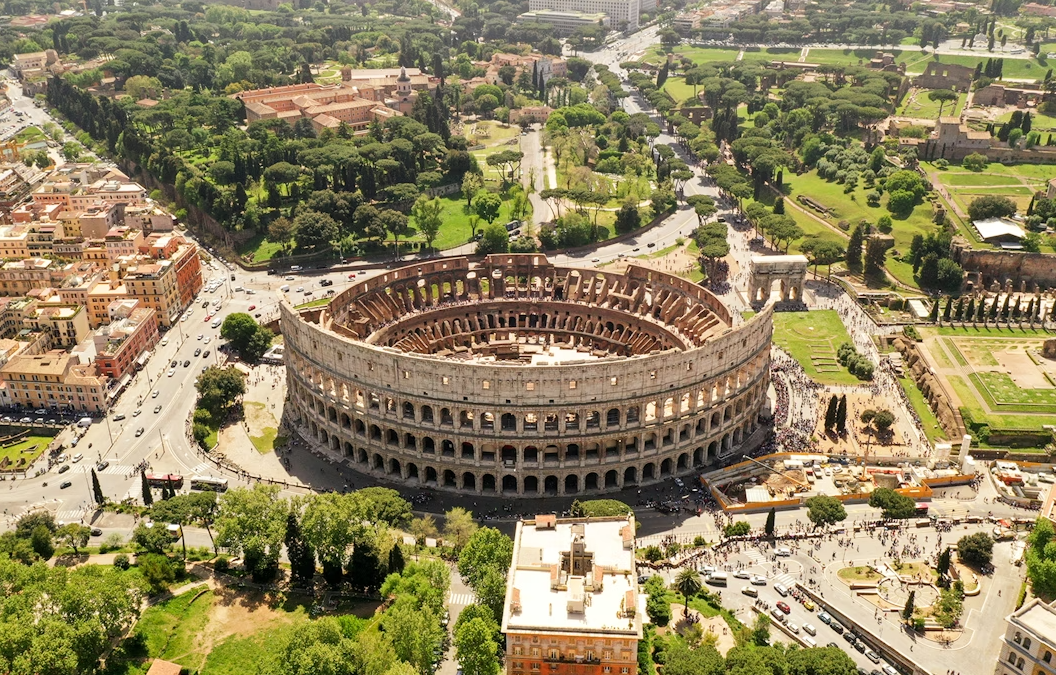
Colosseum

The Colosseum, Rome’s legendary ancient arena, once echoed with gladiator battles and grand shows, and now stands as a powerful symbol of the city's eternal legacy.
Attraction 2
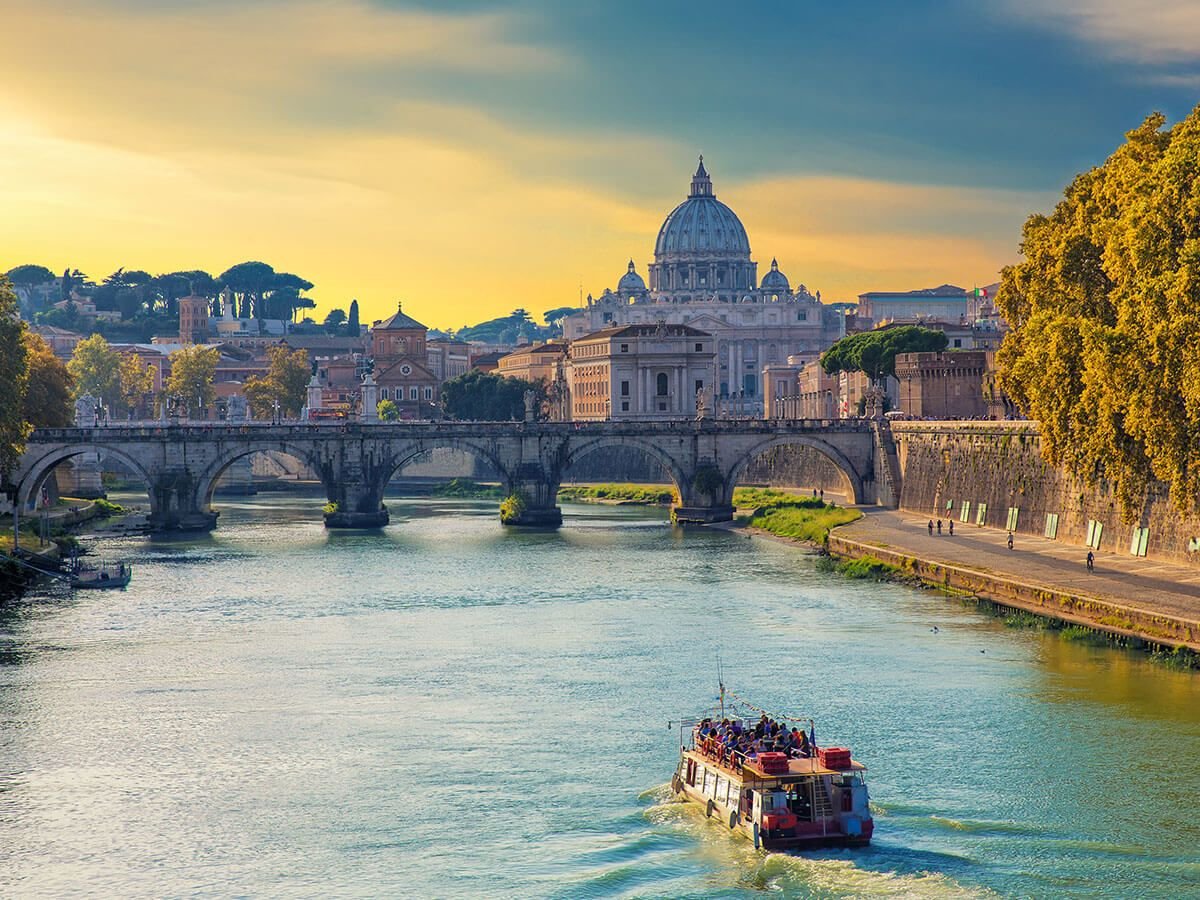
Pantheon

The Pantheon is a masterpiece of Roman ingenuity, crowned by its iconic dome and central oculus, serving as a temple-turned-church for almost two millennia.
Attraction 3
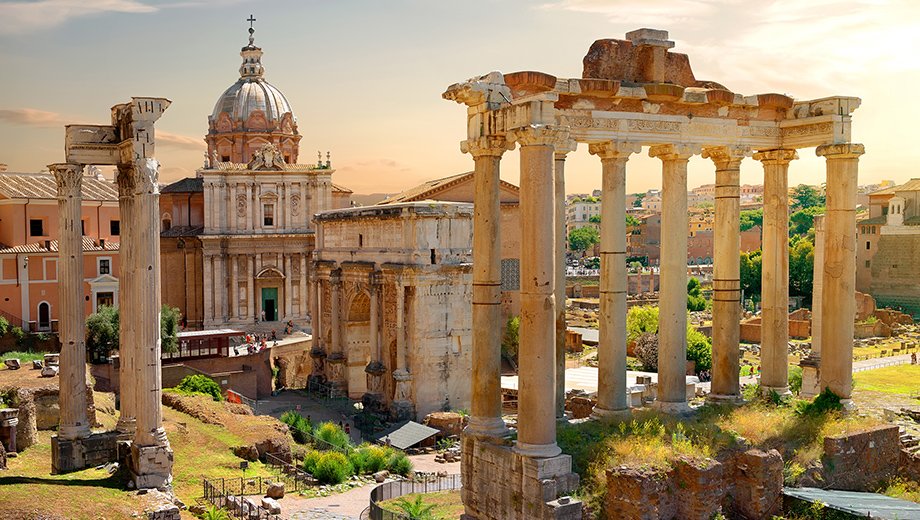
Roman Forum

Once the center of ancient Roman society, the Roman Forum is a vast archaeological park showcasing temples, civic buildings, and storied ruins.

Attraction 4
Vatican City

Vatican City, the spiritual center of the Roman Catholic Church, holds a wealth of art, history, and faith, housing St. Peter’s Basilica and the Sistine Chapel.

Attraction 5
Palatine Hill

Palatine Hill, one of Rome’s famed seven hills, was the site of imperial palaces and offers breathtaking views over the city and its ancient ruins.

Attraction 5
Galleria Borghese

The Galleria Borghese, set within the lush Villa Borghese gardens, showcases a stunning collection of sculptures and paintings by masters such as Bernini, Caravaggio, and Raphael.

Attraction 5
St. Peter’s Basilica

St. Peter’s Basilica, the crown jewel of Vatican City, is a majestic architectural marvel housing Michelangelo’s Pietà and the soaring dome he masterfully designed.

Attraction 5
Sistine Chapel

The Sistine Chapel, famed for Michelangelo’s awe-inspiring ceiling frescoes, is both a masterpiece of Renaissance art and the sacred setting of the papal conclave.

Attraction 5
Castel Sant’Angelo

Castel Sant’Angelo, once Emperor Hadrian’s grand mausoleum, now serves as a museum with sweeping views of Rome and a rich history as a fortress and papal stronghold.

Attraction 5
Trevi Fountain

The Trevi Fountain, Rome's largest and most iconic Baroque fountain, is famed for its stunning sculptures.

Testimonials

Hear From Our Happy Explorers!

Tour in the City

Martin G

A hot visit to the Colosseum!
Had to collect tickets from a shop near to the Colosseum – lady there was most helpful in explaining where we needed to go and to download apps to our phones for the self audio guide (also gave us some free water with the heat!). Found the entrance easy and then enjoyed the tour – only issue was that the GPS signal wasnt great inside so it was difficult to sync the audio guide to what we were looking at. Took a break before doing the Palatine Hill and Roman Forum – we went on a very hot day and it was hard work walking around – make sure you have plenty of water!! Surfaces were very uneven – which is understandble considering its an ancient monument.

Martin G
Colosseum, Palatine Hill and Roman Forum Guided Tour
Tour in the City

FamilyOfFive

Amazing place to visit, weak audio guide
Such an amazing place to visit, it’s easy to understand why this is a must see! The sites were fantastic, but the audio tour was too generic. There were some interesting clips, but not enough about what we were looking at when we were at different points and too much generic history. In retrospect we would have got a lot more from a guide, but it was very nice to go at our own pace.

FamilyOfFive
Colosseum, Palatine Hill and Roman Forum Guided Tour
Tour in the City

Eva N

Unforgettable experience!
This tour was nothing short of amazing! From start to finish, everything was organized, engaging, and informative. Our guide was incredibly knowledgeable and brought the history of the Colosseum to life with fascinating stories, little-known facts, and a real passion for Ancient Rome.
The skip-the-line access was a huge plus—no waiting around in the hot sun! We also got upgraded for an Arena tour and got to explore areas that aren’t always open to the public, which made the experience feel exclusive and even more special.

Eva N

Colosseum, Palatine Hill and Roman Forum Guided Tour
Tour in the City

Poppy B

Very good customer service from Dolly
I was due to travel in August on this holiday however due to operational reasons, the tour may not have run and I was made aware straight away. I dealt with a women called Dolly and she offered me alternative options and we decided to refund the tour which was done promptly. Dolly gave me some brilliant advice and some useful insight to Rome.She was fab!

Poppy B
Colosseum, Palatine Hill and Roman Forum Guided Tour
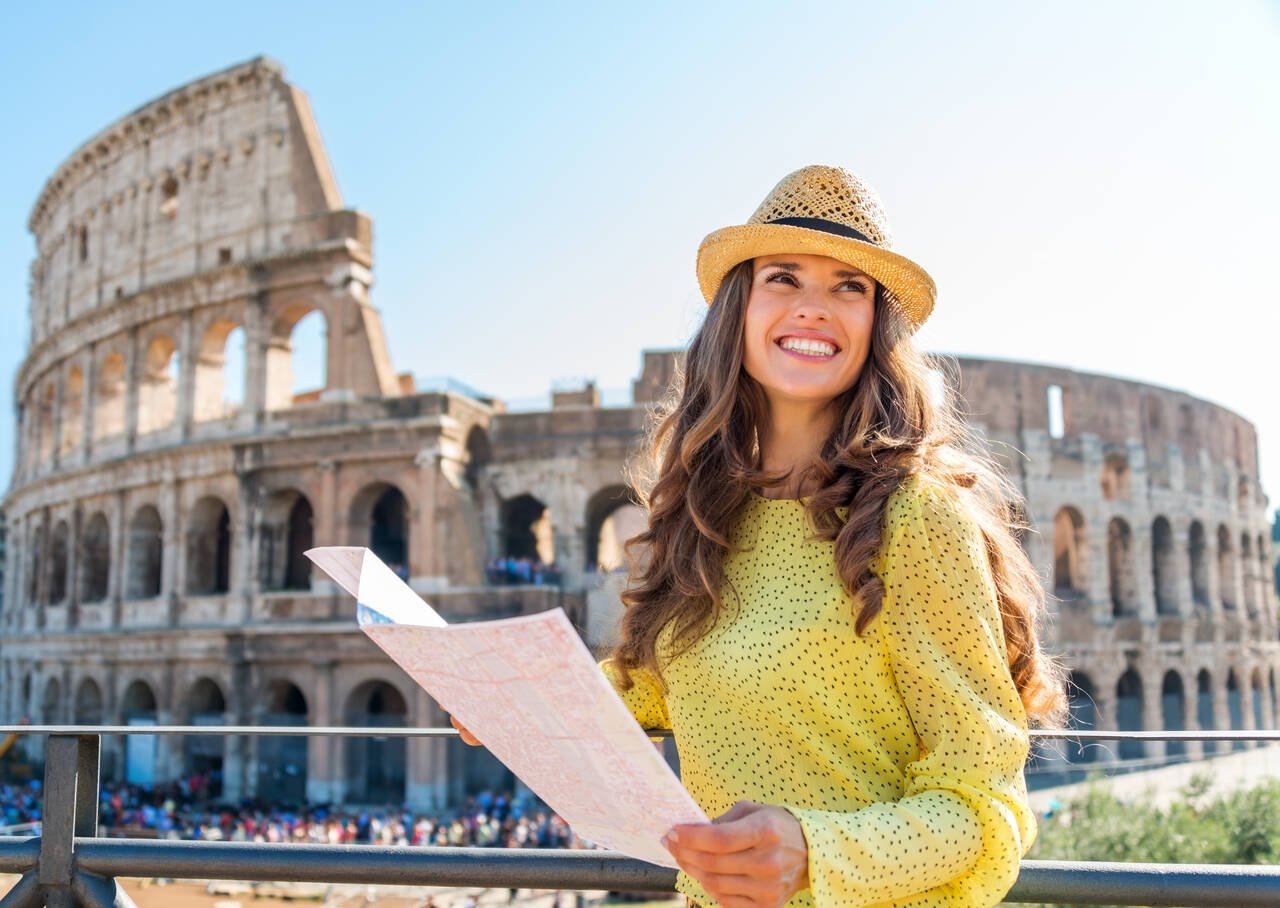
Happy woman tourist looking up from map at Rome Colosseum

Tom P

Good day out
Really enjoyed the experience, can’t remember the tour guide’s name but he was very good. Very informative and detailed on the tour which kept me engaged about the history. It wasn’t as busy as usual which was also a pleasant experience. Highly enjoyable, many thanks.

Tom P

Colosseum Arena Guided Night Tour
Happy woman tourist looking up from map at Rome Colosseum

James C

Well worth it

Really well organised and our guide was great. Really informative and engaging. You wasn’t rushed and had a nice flow to it.
Would highly recommend this. Not sure you’d capture everything without the guide.

James C
Colosseum Arena Guided Night Tour

Testimonials

Hear From Our Happy Explorers!

Tour in the City

Martin G

A hot visit to the Colosseum!
Had to collect tickets from a shop near to the Colosseum – lady there was most helpful in explaining where we needed to go and to download apps to our phones for the self audio guide (also gave us some free water with the heat!). Found the entrance easy and then enjoyed the tour – only issue was that the GPS signal wasnt great inside so it was difficult to sync the audio guide to what we were looking at. Took a break before doing the Palatine Hill and Roman Forum – we went on a very hot day and it was hard work walking around – make sure you have plenty of water!! Surfaces were very uneven – which is understandble considering its an ancient monument.

Martin G

Colosseum, Palatine Hill and Roman Forum Guided Tour
Tour in the City

FamilyOfFive

Amazing place to visit, weak audio guide
Such an amazing place to visit, it’s easy to understand why this is a must see! The sites were fantastic, but the audio tour was too generic. There were some interesting clips, but not enough about what we were looking at when we were at different points and too much generic history. In retrospect we would have got a lot more from a guide, but it was very nice to go at our own pace.

FamilyOfFive

Colosseum, Palatine Hill and Roman Forum Guided Tour
Tour in the City

Eva N

Unforgettable experience!
This tour was nothing short of amazing! From start to finish, everything was organized, engaging, and informative. Our guide was incredibly knowledgeable and brought the history of the Colosseum to life with fascinating stories, little-known facts, and a real passion for Ancient Rome.
The skip-the-line access was a huge plus—no waiting around in the hot sun! We also got upgraded for an Arena tour and got to explore areas that aren’t always open to the public, which made the experience feel exclusive and even more special.

Eva N

Colosseum, Palatine Hill and Roman Forum Guided Tour
Tour in the City

Poppy B

Very good customer service from Dolly
I was due to travel in August on this holiday however due to operational reasons, the tour may not have run and I was made aware straight away. I dealt with a women called Dolly and she offered me alternative options and we decided to refund the tour which was done promptly. Dolly gave me some brilliant advice and some useful insight to Rome.She was fab!

Poppy B

Colosseum, Palatine Hill and Roman Forum Guided Tour
Happy woman tourist looking up from map at Rome Colosseum

Tom P

Good day out
Really enjoyed the experience, can’t remember the tour guide’s name but he was very good. Very informative and detailed on the tour which kept me engaged about the history. It wasn’t as busy as usual which was also a pleasant experience. Highly enjoyable, many thanks.

Tom P

Colosseum Arena Guided Night Tour
Happy woman tourist looking up from map at Rome Colosseum

James C

Well worth it

Really well organised and our guide was great. Really informative and engaging. You wasn’t rushed and had a nice flow to it.
Would highly recommend this. Not sure you’d capture everything without the guide.

James C
Colosseum Arena Guided Night Tour
tourinthecity

Newsletter

Receive the latest news updates directly in your inbox.

Keep up with our latest news,investor updates, and media releases.